Mononen and Määttänen lead Next Lap Running Project, a team that backs professional coaching
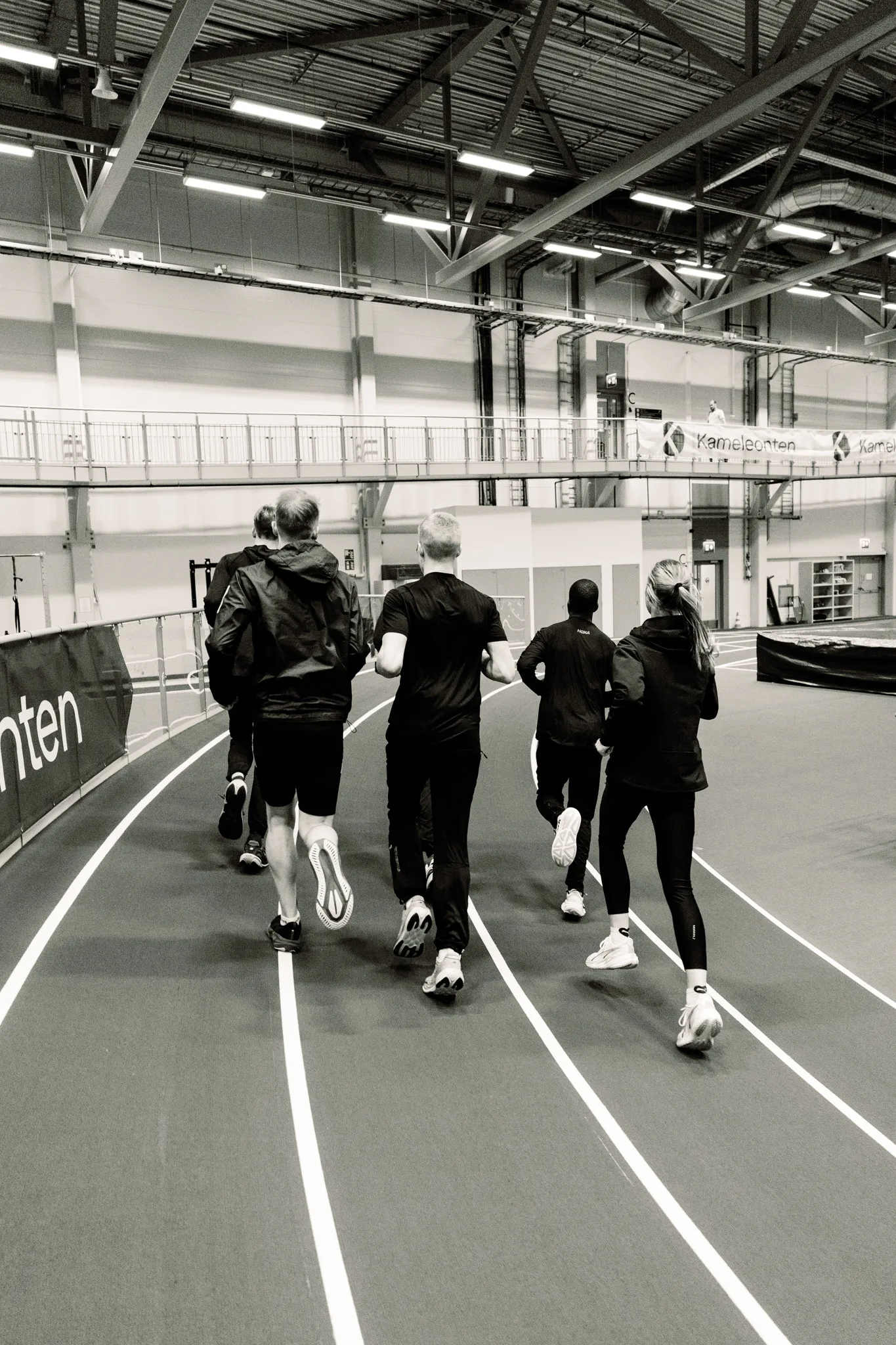
Next Lap Running Project, a new high-performance project in Finnish distance running, brings together eight talented runners. It also gives the project’s coaches, Mikko Rajaniemi and Jan Petrac, the means to coach as professionals.
The project’s athletes are Ilona Mononen, the Finnish record holder in the 3000 m steeplechase, Eveliina Määttänen, an international-level 800 m runner, and Niko Viljola, Aleksi Ahlfors, Leo Rajaniemi, Elle Ceder, Eden Kotilainen and Lauri Mononen.
Mononen, Rajaniemi and Eden Kotilainen train under Rajaniemi. So does Aleksi Ahlfors, who placed fifth in the 3000 m at the World U20 Championships this summer. He moved to Rajaniemi’s group in the fall.
Määttänen and Viljola continue with Petrac. Two middle-distance talents, Elle Ceder and Lauri Mononen, are new to his group.
The project’s goal is a professional training environment that gives runners a realistic chance to chase the world’s best. One of the people who started it is Mika Flink, CEO of Medifon Oy, the project’s main partner.
“We identified four key areas to develop: the coaches’ ability to take part in daily training, world-class training conditions, the use of high-quality group training, and protecting the athletes’ health and the continuity of their training,” Flink says.
Rajaniemi’s working life shifts to professional coaching
The project sharpens the athletes’ daily training by improving Rajaniemi’s and Petrac’s ability to work as professionals. Rajaniemi is a sales manager at a company that makes healthcare equipment and furniture, but from now on his work will center on coaching.
“I am not giving up my job completely yet. But this setup, together with the Finnish Athletics Federation and the Finnish Olympic Committee, means I can cut my working hours considerably. I can be at the athletes’ training on weekdays, and I can be at camps and competitions without using my vacation or taking unpaid leave, which in practice meant doing it for nothing,” Rajaniemi says.
A coach on site is needed. A top runner like Mononen spends 150 to 180 days a year at training camps. On top of that come competition trips and championships, where an on-site coach is needed too.
“Distance runners can train on their own. But at a camp, and at altitude, it is good to have the coach there. Things always happen. Having the coach there also gives you control,” Rajaniemi says.
Training together pays off
Petrac already coaches full time, but the project gives his work substantial support and two new athletes.
“The project’s support is a big help. Because of it, Mikko and I can attend every camp, and we get support for flights, accommodation and similar costs. I hope the project also draws interest from new partners,” Petrac says.
The runners’ training season includes three to four long training camps. The first is a month at altitude in Dullstroom, South Africa. The camps are built around group training.
“Group sessions pay off because the group has different types of athletes who can still do a lot together. When you get to train as a group, it is much more rewarding,” Rajaniemi says.
After the indoor season, the group goes to an altitude camp in March. In April some of the athletes go to Portugal or to the mountains.
“In May we will most likely go to the mountains in Europe again, as a big group,” Rajaniemi says.
The athletes have welcomed the project.
“Hard sessions are better quality in a group. Having the coach there all the time also removes all the extra hassle and stress around training. You just get clear instructions to follow,” says Ilona Mononen.
Mononen spends most of November at a training camp in Sierra Nevada, Spain, and races at the European Cross Country Championships in Belgrade on December 13.
Määttänen: training together motivates, and more 1500 m races are planned
Määttänen finds the group training at camps helpful in many ways.
“It is motivating when you can work together in the daily life of a camp, get a bit of sparring from the others and, of course, company. It does not always mean doing the whole session the same way. Even being at training at the same time adds motivation day to day,” Määttänen says.
Määttänen believes it helps the younger athletes that she and Mononen, both championship-level athletes, open up their training routines to them. Indoors, she is aiming for the European Indoor Championships in Valencia in March. Her main goal for the outdoor season is the World Championships in Beijing in the fall.
Määttänen also plans to race the 1500 m a little more than before.
“For several seasons now the idea has been that improving the 800 m needs an improvement in the 1500 m. We continue on that path, but now I will race the 1500 m a bit more. Both middle distances stay in the program.”
Aiming for international success and Brisbane 2032
The project’s aim is a lasting model that supports the development of the current athletes and, in the future, offers opportunities to new Finnish running prospects as well. New partners are welcome at any time.
The project’s sporting targets are the coming international championships and, in the long term, the 2032 Olympic Games in Brisbane.
“We want to build something that lasts. The goal is not only the success of individual athletes, but an environment where Finnish distance runners can develop to international level year after year,” Mikko Rajaniemi says.